Stitching is not merely a technique; it is a language expressed through line — a silent form of narration. Every trace left on fabric becomes a record of a story, an emotion, or an inquiry into belonging.
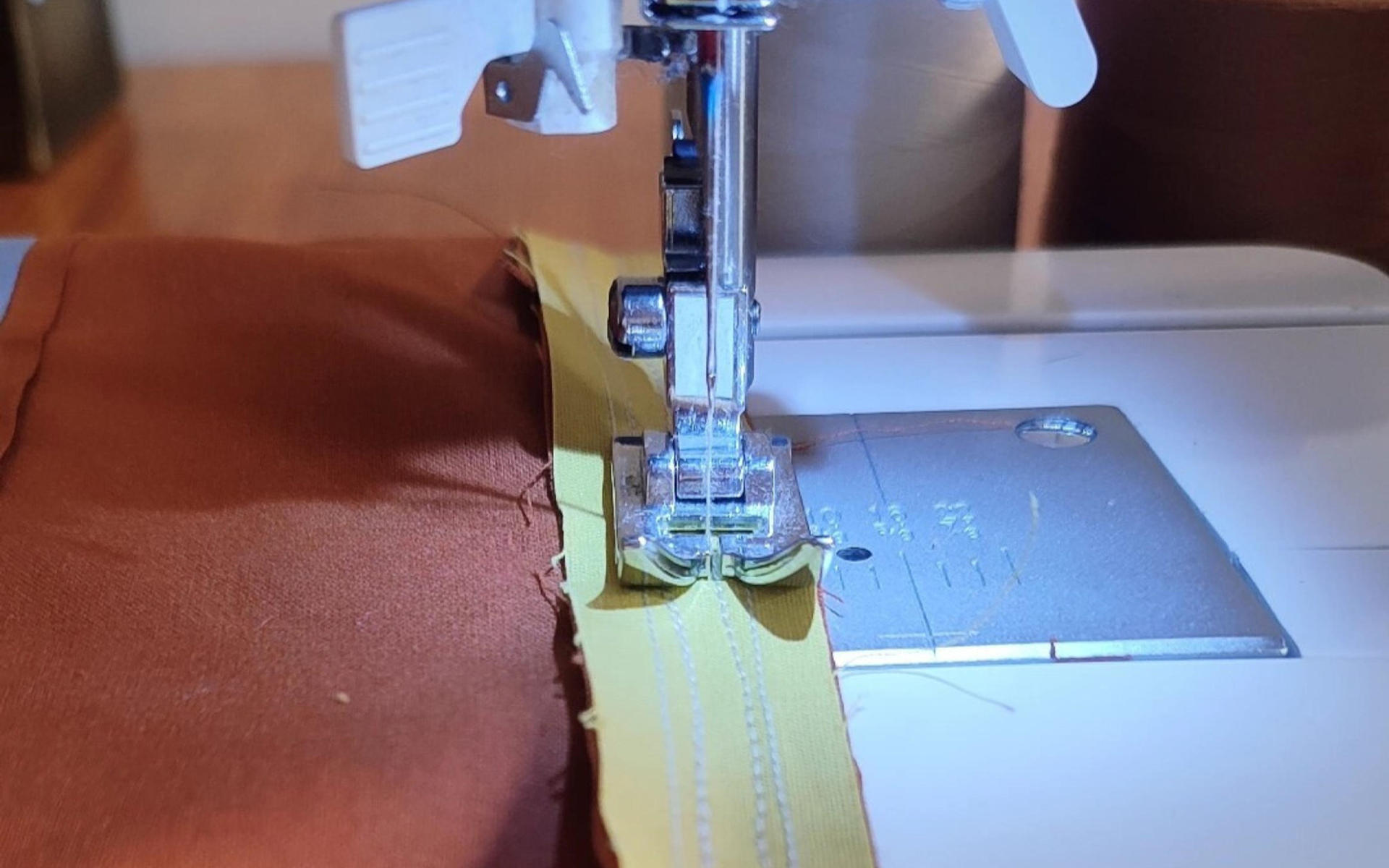
The idea of “drawing with stitches” offers a tactile and profound experience, one that goes beyond the marks of a pen on paper. Thread does not simply mark a surface; it joins, separates, or redefines it. Each stitch becomes a permanent trace on the body of the fabric, while in the artist’s mind it is the tangible expression of a thought.
For me, the line is the core element of my practice. It is not only a formal device but a bridge between thought and feeling, making the invisible visible. Every line I stitch is like a visual record of my state of being and my search for belonging. In my work, the line exists in both its fragile and resistant aspects — just like the way humans relate to life and to themselves. Thus, in my practice, the line transcends its aesthetic function; it becomes the most fundamental expression of identity, memory, spatial experience, and the questioning of belonging. The contrast between the softness of fabric and the sharpness of stitch carries both personal and universal narratives. In this way, the line in textile art becomes not only a formal but also a conceptual key.